Custom Iron Doors in West Houston: What Homeowners Should Know Before They Order
A.G. Metalworks • March 19, 2026

What Makes a Custom Iron Door Different

A custom iron door is not a showroom purchase. It is fabricated to the specific dimensions of your entryway, built to the design you choose, and finished to the specification that makes sense for your home and your climate. That process is meaningfully different from selecting a door from a catalog, and understanding the difference helps set realistic expectations before any conversation with a fabricator begins.


We have been doing residential ironwork in Houston for nearly 40 years, and custom iron doors are one of the projects where homeowners benefit most from knowing what they are getting into early. The investment is significant, the design decisions are numerous, and the fabrication timeline is longer than most people assume. Getting clear on all of this upfront makes the project run more smoothly.


Design Decisions Worth Making Before You Call

The design conversation for a custom iron door covers more ground than most homeowners expect. It is not just about whether the door looks right from the street. It touches on how the entry relates to the rest of the home's exterior, how much light you want the door to let through, what the hardware looks like, and how the design will age over time.


A few things worth thinking through before your first conversation:

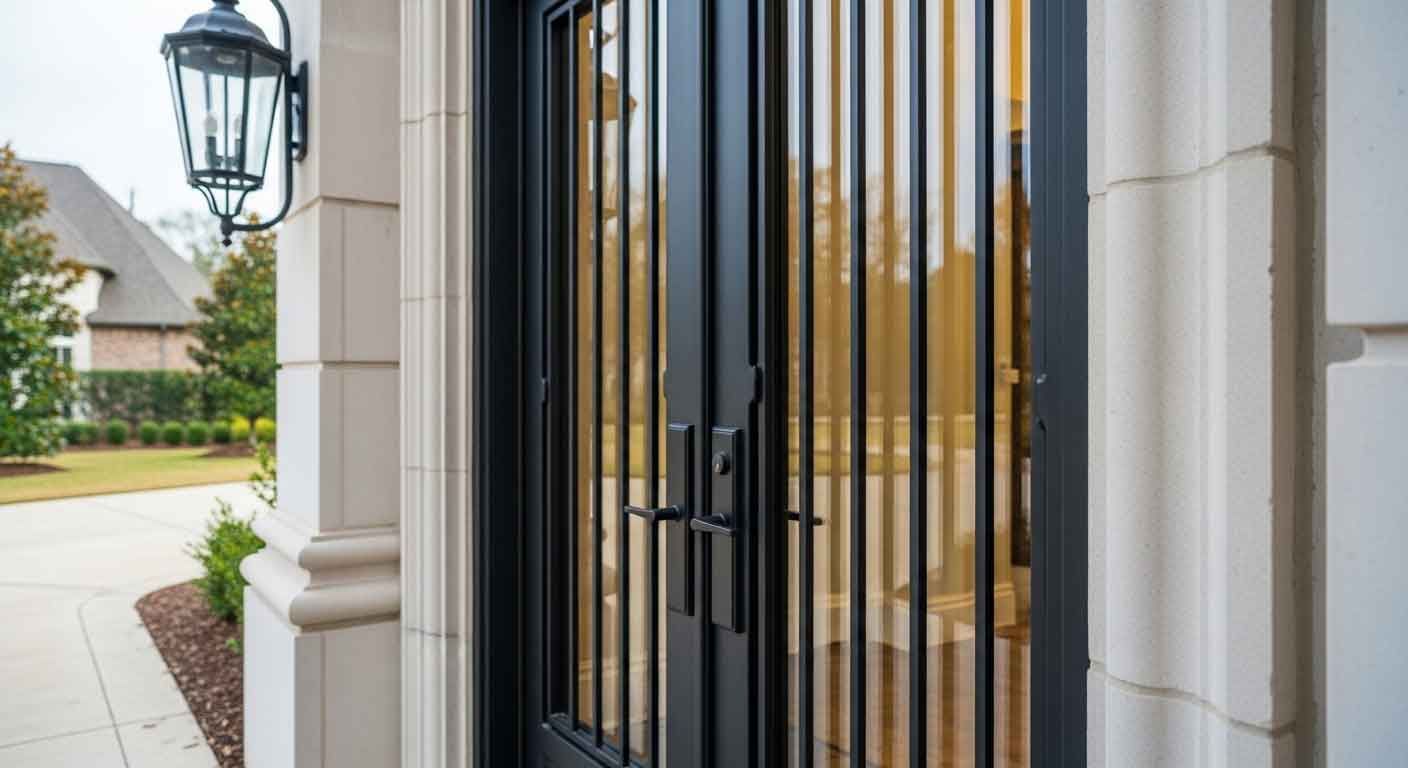
  • Single or double door. Double doors make a strong visual statement and suit wider entryways. Single doors with sidelights or a transom window can achieve similar presence on a narrower opening. The framing and opening dimensions determine what is structurally possible.
  • Design direction. The trend we see in West Houston and Memorial right now is moving toward cleaner lines. Slim vertical pickets, rectangular profiles, minimal scrollwork. That direction has staying power. Homes with ornate ironwork elsewhere on the property, like a detailed entry gate or decorative fencing, sometimes call for a door that echoes that aesthetic. We work from whatever direction makes sense for your specific home.
  • Glass inserts. This is one of the most significant functional decisions on a custom iron door. Clear glass maximizes light and visibility from the inside but offers no privacy from the street. Frosted, textured, or smoked glass reduces visibility while still letting light through. The style and pattern of the glass also affects the overall look of the door significantly. Have a general sense of your privacy preference before the design conversation.
  • Hardware and hardware finish. Door hardware is often chosen last, but it should be part of the design conversation from the beginning. Matte black hardware is the most common choice right now and pairs naturally with a black powder coat finish. Oil-rubbed bronze, satin nickel, and other finishes are available, but the hardware should be selected in the context of everything else on the entry.


Finish and Glass: What Performs Well in Houston

Houston's climate is hard on exterior finishes. The heat, the humidity, and the direct sun exposure put real demands on any metal component that lives outdoors, and a front door takes more of that exposure than most.


Powder coat is the standard finish we apply to residential ironwork, including custom doors. When it is properly applied over clean, prepared metal, it holds up well under Houston conditions. It resists rust, handles UV exposure better than paint, and is available in a wide range of colors. Flat black is the most requested, but the color range is broad. If your entry has a specific finish specification from an architect or designer, bring that to the consultation and we will work from it.


One practical note on overhang: a custom iron door that is fully exposed to weather without any overhang protection wears faster than one that is sheltered. If your entryway has minimal coverage, that is worth discussing during the design phase.


For glass, insulated glass with a sealed unit is the right choice for an exterior door in this climate. It reduces heat transfer and handles the expansion and contraction that comes with temperature swings better than single-pane options.


What the Fabrication Process Looks Like

The process starts with a consultation and field measurement. We need the exact opening dimensions to build a door that fits correctly. Plan dimensions are a starting point, but field measurements are what we fabricate from.


Once the design is confirmed and the measurements are verified, fabrication begins in our shop. Custom iron doors involve more shop time than railings or fencing because the tolerances are tighter and the components are more complex. We will give you a realistic timeline when we see the scope. Rushing the fabrication on a front door is not something we recommend.


Installation typically takes one day once the door is ready. We handle removal of the existing door, installation of the new unit, hardware installation, and weather sealing.


Frequently Asked Questions


Can you work from an inspiration image? We can work from whatever you bring, whether that is a photo from Houzz, a picture of a neighbor's door, or an architect's drawing. The more specific the reference, the faster the design conversation moves.


Does a custom iron door require HOA approval? In some West Houston and Memorial communities, yes. If your property is in an HOA, check your CC&Rs or contact your management company before the design is finalized. We can produce a drawing for your HOA submission as part of the process, the same way we handle driveway gate approvals.


Is an iron door energy-efficient? An iron door with insulated glass panels and proper weatherstripping performs reasonably well in Houston's climate. The door itself conducts heat, so the glass and sealing choices matter. We talk through this during the consultation.


Ready to Talk About Your Entry?

A.G. Metalworks is the residential division of A.G. Welding, and we have been fabricating custom ironwork for West Houston and Memorial homeowners for nearly 40 years. A front entry is one of the most visible improvements you can make to a home. We take that seriously and we build it like it.

Contact A.G. Metalworks to schedule a free consultation or call us at (346) 528-5677.
By A.G. Metalworks June 1, 2026
What Custom Home Builders in Houston Look for in a Metal Fabrication Partner Why the fabricator relationship matters more on a custom build than on a production home What builders need that homeowners typically do not: schedule reliability, clear scope communication, and no surprises How a fabricator who understands construction sequencing makes a builder's job easier What questions builders should ask a fabricator before adding them to a preferred subcontractor list How long-term fabricator relationships develop and why builders who have used the same shop for years rarely look elsewhere What A.G. Metalworks brings to new builder relationships built over nearly 40 years of Houston residential work Internal links: /services/stair-railings, /services/fencing, /contact
Interior designer reviewing custom iron stair railing samples in Houston home
By A.G. Metalworks May 25, 2026
What Houston interior designers should know about working with a custom metal fabricator: lead times, HOA drawings, and what makes a fabricator easy to work with.
Craftsman working on custom iron railing in a Houston metal fabrication shop
By A.G. Metalworks May 18, 2026
Custom metal fabrication follows a clear sequence from consultation to installation. Here is what West Houston homeowners should expect at every step.
Close-up of powder coat finish on custom iron gate at a West Houston residential property
By A.G. Metalworks May 11, 2026
Houston's heat and humidity are hard on iron finishes. What West Houston homeowners should know about powder coat, rust prevention, and annual maintenance.
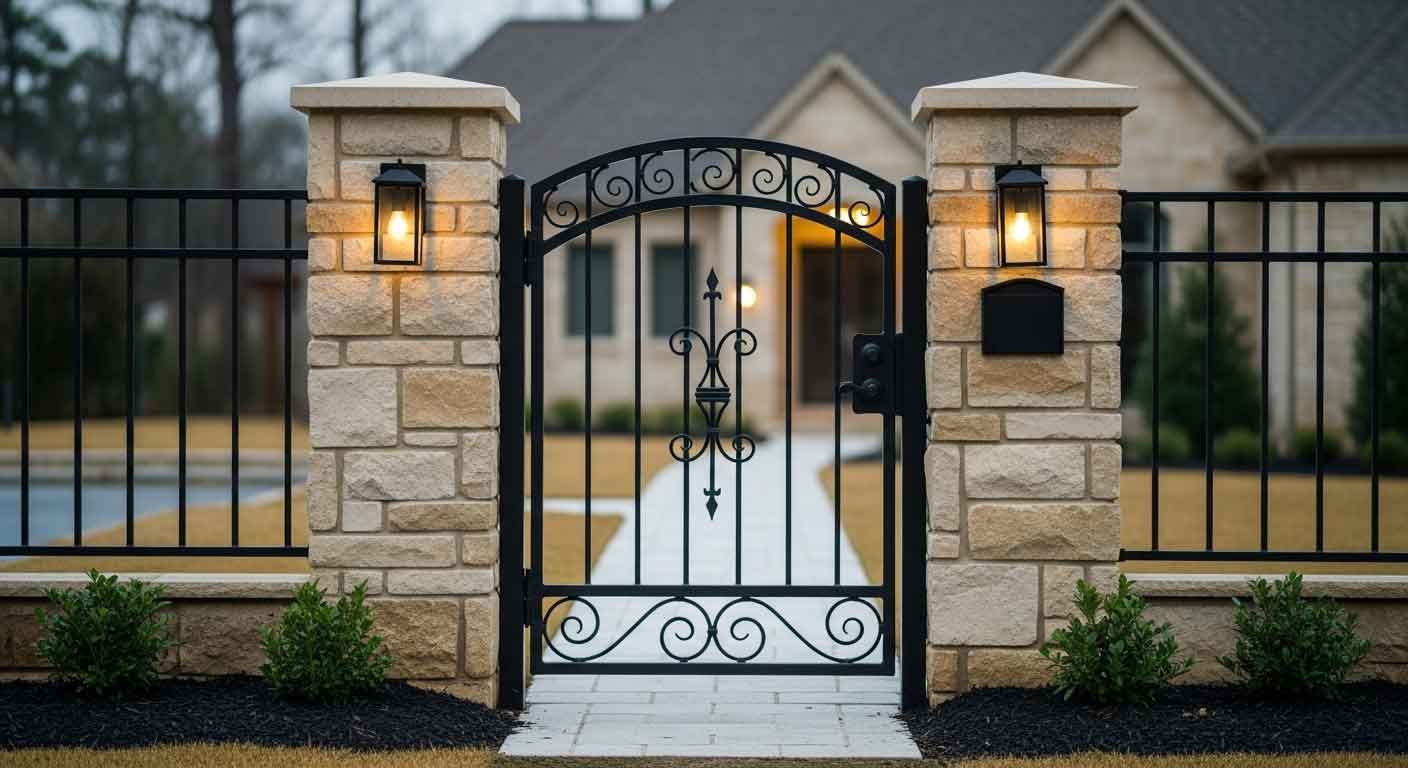
Custom wrought iron pedestrian entry gate set into perimeter fencing at a West Houston residential
By A.G. Metalworks May 4, 2026
Pedestrian entry gates are often overlooked in Houston renovation planning. A.G. Metalworks walks you through design, hardware, and HOA submission for your iron gate.
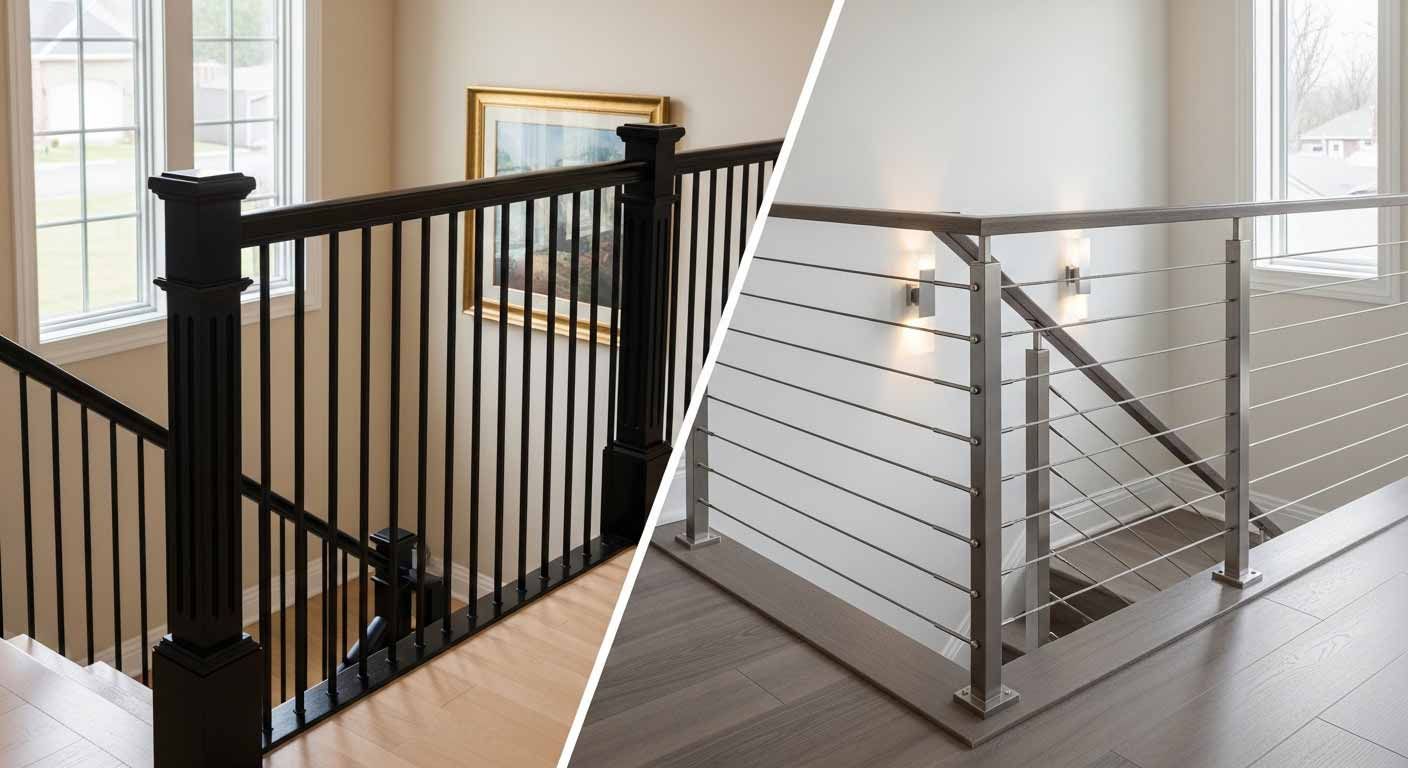
Split view comparing custom iron stair railing and stainless steel cable railing inside Houston home
By A.G. Metalworks April 20, 2026
Iron and stainless steel cable railing solve different design problems in Houston homes. Here is how to read the comparison before you choose a direction.
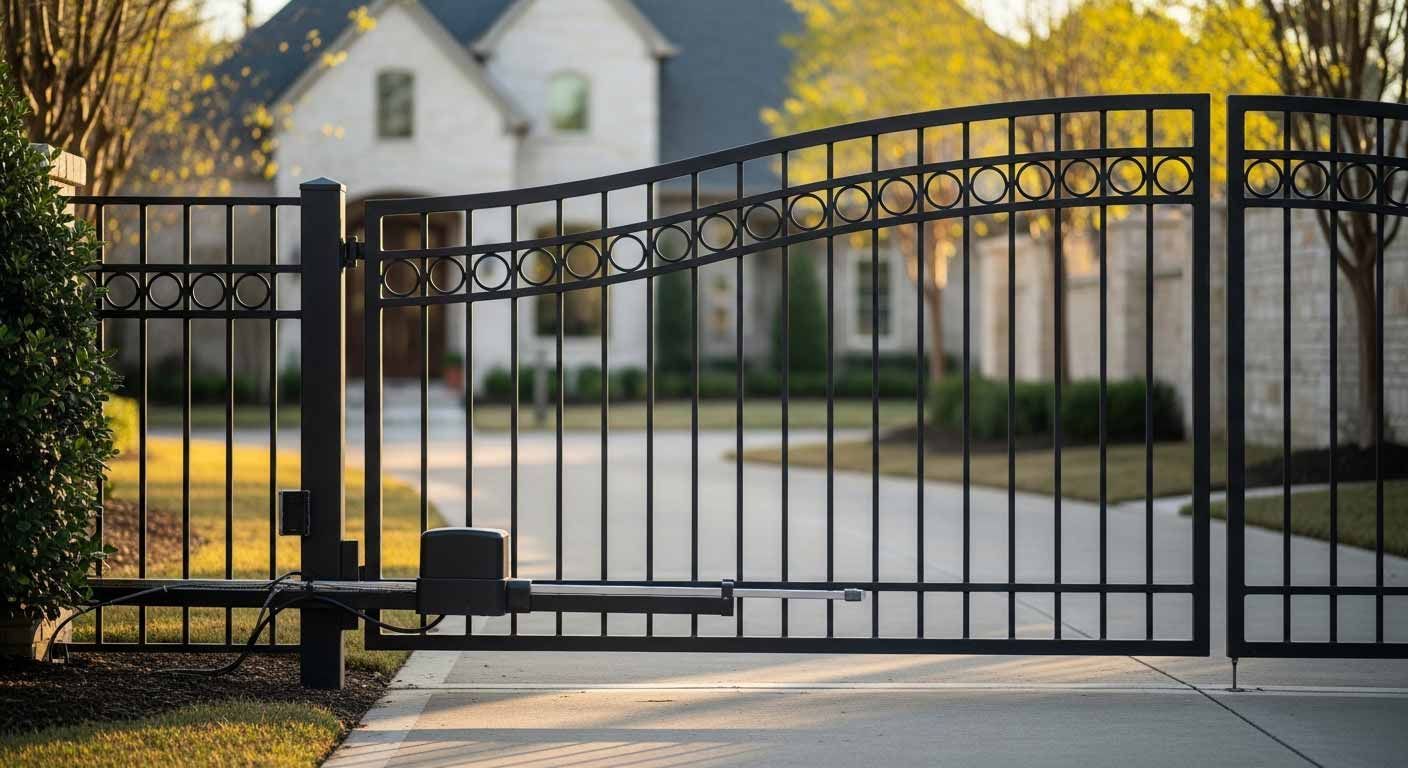
Custom double-panel wrought iron swing gate with automated operator at a West Houston residential dr
By A.G. Metalworks April 13, 2026
Automated driveway gates in Houston involve decisions about gate type, operators, and HOA approval that should be made before fabrication starts. Here is what to work through first.
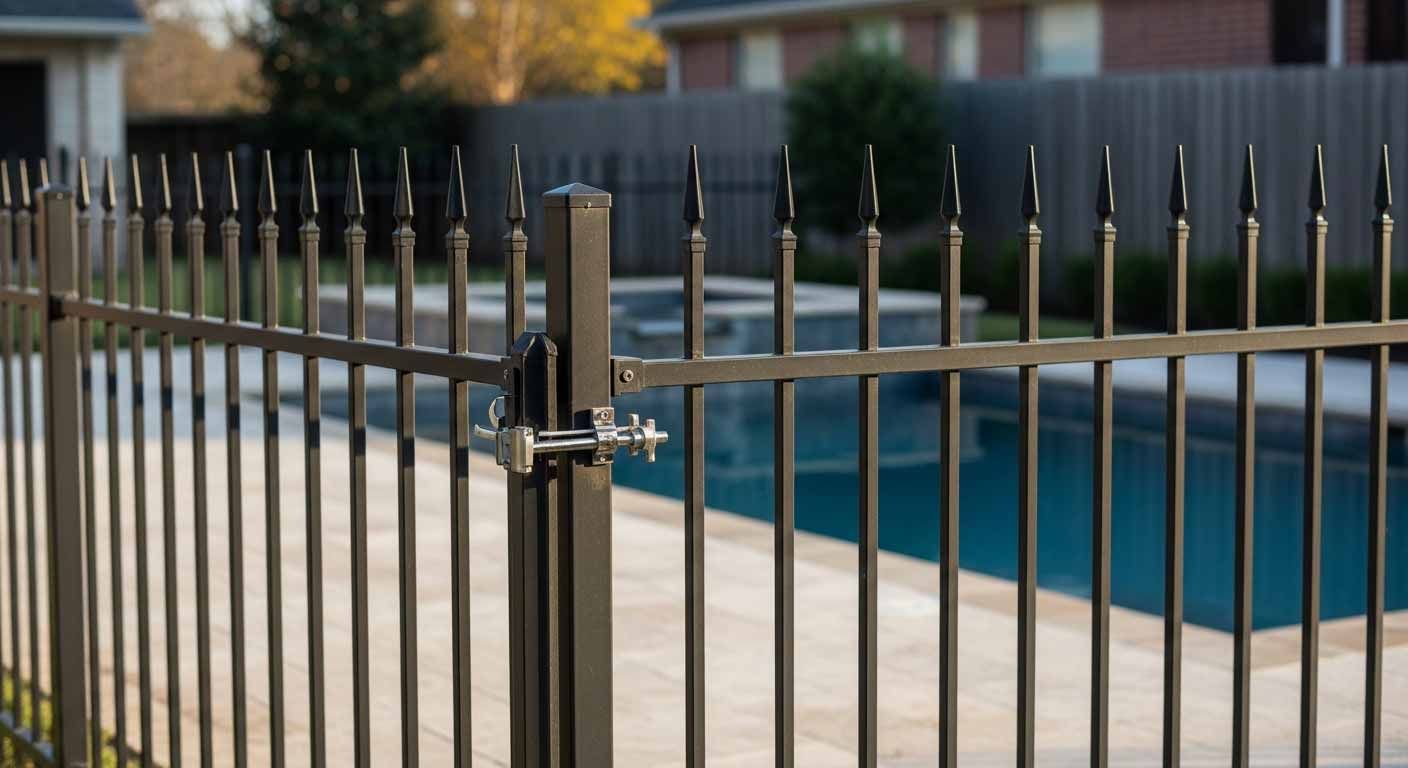
Custom ornamental iron pool fence with vertical pickets and self-latching gate at a West Houston res
By A.G. Metalworks April 6, 2026
Pool fencing in Houston must meet Texas code minimums and clear HOA review before installation. Here is what West Houston and Memorial homeowners need to know.
Custom flat-top black iron fence surrounding a West Houston residential property with powder coat
By A.G. Metalworks March 30, 2026
Iron fence style, materials, and HOA approval in Memorial and West Houston. A.G. Metalworks explains what to consider before choosing a design.
By A.G. Metalworks March 9, 2026
Why the Fabricator Matters as Much as the Design Homeowners in West Houston and Memorial spend real time choosing a design for their iron stair railings , driveway gates , or property fencing . They browse Houzz, save inspiration photos, and think through how the finished product will look in their home. That part of the process gets a lot of attention, and it should. What sometimes gets less attention is the fabricator. The company you hire determines whether the design you chose actually gets built the way you imagined it. A great design paired with the wrong fabricator leads to frustration, delays, and results that don't match the picture in your head. A good fabricator makes the entire process feel straightforward. We have been doing this work in Houston for nearly 40 years, and we have seen what happens when the fit between homeowner and fabricator is right, and when it is not. Here is what we think matters most. Look for a Track Record You Can Verify Experience matters in custom metalwork. Fabricating a one-of-a-kind iron railing or gate is not the same as installing something off a shelf. Every project involves measurements specific to your home, design decisions that affect both the look and the structural integrity, and finishing details that determine how the piece holds up over time in Houston's climate. Ask how long the company has been in business. Ask to see examples of past work, particularly projects similar to yours. A fabricator who has been doing residential ironwork for decades has worked through problems that a newer shop has not encountered yet. Look for range too. A company that handles stair railings, gates, fencing, and custom iron doors has broader fabrication capability than one that only does a single product type. That range often translates to better problem-solving when something unexpected comes up on your project. Ask About the Full Process Some fabricators only handle part of the job. They may fabricate in the shop but hire someone else for installation. They may not offer design consultation. They may not handle finishing. A one-stop-shop approach, where the same company manages design, fabrication, powder coating, and installation, gives you a single point of contact and a single company accountable for the outcome. When the crew that installs the railing is the same team that fabricated it, fewer things get lost in translation. Ask specifically what the company handles in-house and what gets subcontracted. Ask what the consultation looks like. Can they work from an inspiration photo you found on Houzz or Pinterest? Can they produce drawings for your review before fabrication begins? These are reasonable questions, and any experienced fabricator will answer them without hesitation. Pay Attention to the Proposal This is one of the clearest signals of how a fabricator operates. A vague proposal that lists a single price and a loose description of the work leaves room for confusion later. A detailed proposal that specifies materials, finish type, design details, timeline, and what is included in the price tells you the company has thought through the project before asking for your commitment. In our experience, the proposal is where trust either builds or breaks down. When both sides know exactly what is being built, how it will be finished, and when it will be installed, the project runs more smoothly. When those details are left ambiguous, problems show up on installation day. Consider Local Knowledge A fabricator based in the Houston area understands things that a company shipping products from out of state does not. They understand how Houston's heat and humidity affect powder coat adhesion and long-term finish durability. They know the neighborhoods. They know what HOA architectural review committees in Memorial and West University typically look for when evaluating gate and fence designs. If your project requires HOA approval, ask whether the fabricator has experience producing submission-ready drawings. This step can save weeks of back-and-forth if the drawings meet the committee's expectations the first time. Check Certifications and Insurance A residential metal fabricator should carry business liability insurance and workers' compensation insurance. This protects you if something goes wrong during installation. Ask for proof. Any legitimate company will provide it without hesitation. Welding certifications also matter. Welders certified to AWS D1.1 standards have demonstrated competency through a formal testing process. A City of Houston structural steel fabricator certification means the company has met the city's requirements for fabrication quality. These are not marketing labels. They are verifiable credentials. Frequently Asked Questions How many estimates should I get before choosing a fabricator? Two or three is typical. But compare the detail in each proposal, not just the bottom line number. The lowest bid is not always the best value if the scope is vague or the materials are not clearly specified. Should I hire a fabricator who also does commercial work? It can actually be an advantage. A company that handles both residential and commercial projects often has stronger fabrication infrastructure, broader welding capability, and more experience managing complex jobs. What matters is that they understand the residential design sensibility and treat your home project with the same care. What if I do not have a specific design in mind yet? That is completely normal. A good fabricator will walk through your options during the consultation and help you figure out what works for your home, your style, and your budget. Bring whatever you have, even if it is just a few saved photos from Houzz. Finding the Right Fit for Your Project Choosing a fabricator is a decision that affects the quality, timeline, and experience of your entire project. The right fabricator makes it easier. They communicate clearly, build what they said they would build, and stand behind their work. A.G. Metalworks is the residential division of A.G. Welding, and we have been doing custom residential ironwork in Houston for nearly 40 years. We handle everything from design consultation through installation, and we provide detailed proposals so there are no surprises. If your project involves HOA approval, we can produce the drawings your committee needs. Contact A.G. Metalworks to discuss your project by requesting a free consultation or calling us at (346) 528-5677.