Iron vs. Stainless Steel Cable: How Houston Homeowners Are Choosing Stair Railings Right Now
Why This Comparison Keeps Coming Up
If you're renovating a staircase in Houston, there's a good chance you've narrowed it down to two options that look very different but keep showing up in the same inspiration searches: traditional iron railing and stainless steel cable. We hear this question from homeowners in West Houston and Memorial who have done their research, pulled together a folder of photos, and still aren't sure which direction fits their home.
Both materials are genuinely good choices. The problem is they're not competing for the same aesthetic, and they don't serve the same homeowner. Understanding what each does well makes the decision clearer.
If you're planning a stair railing renovation and haven't committed to a direction yet, this is worth reading before you call anyone.
What Cable Railing Looks Like and Where It Fits
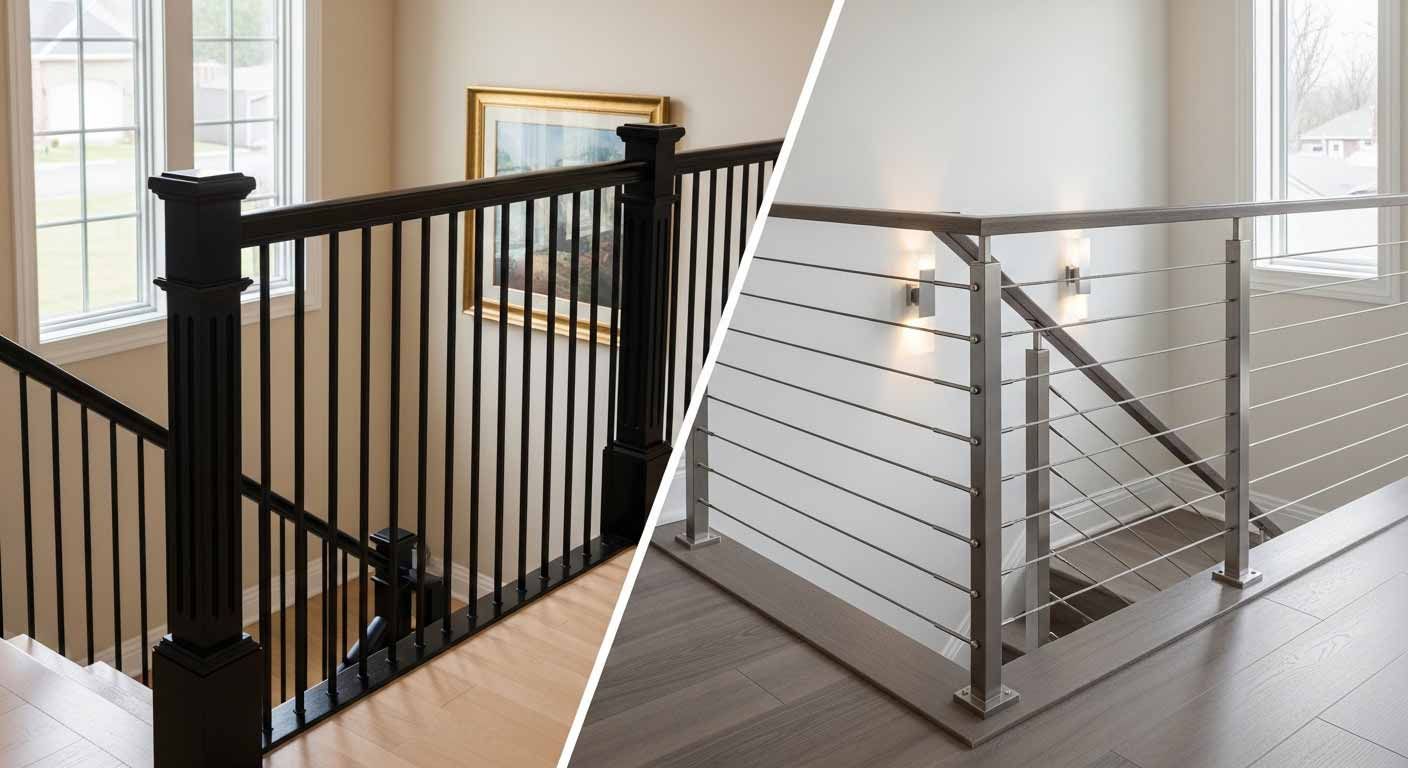
Stainless steel cable railing runs horizontal cables between posts, typically 1/8 inch to 3/16 inch in diameter, tensioned to create an open, unobstructed sightline through the staircase. There's very little visual weight. Light passes through it. The staircase reads as open space rather than a defined structure.
This look fits a specific kind of home. Contemporary and transitional architecture with clean lines, large windows, and minimal ornament is where cable railing integrates naturally. Homeowners working with designers on modern renovations often come in already set on this direction, and in that context it makes sense.
Where it tends to struggle is in traditional, Mediterranean, or brick homes with more architectural character. A cable system in a home with wood paneling, ornate millwork, or arched entries can feel mismatched in a way that bothers the eye even when the materials themselves are well-made. It's not a knock on cable. It's a mismatch of vocabulary.
We've been doing custom stair railings for Houston homeowners for nearly 40 years, and that pattern holds across a lot of different projects.
What Iron Railing Offers That Cable Cannot
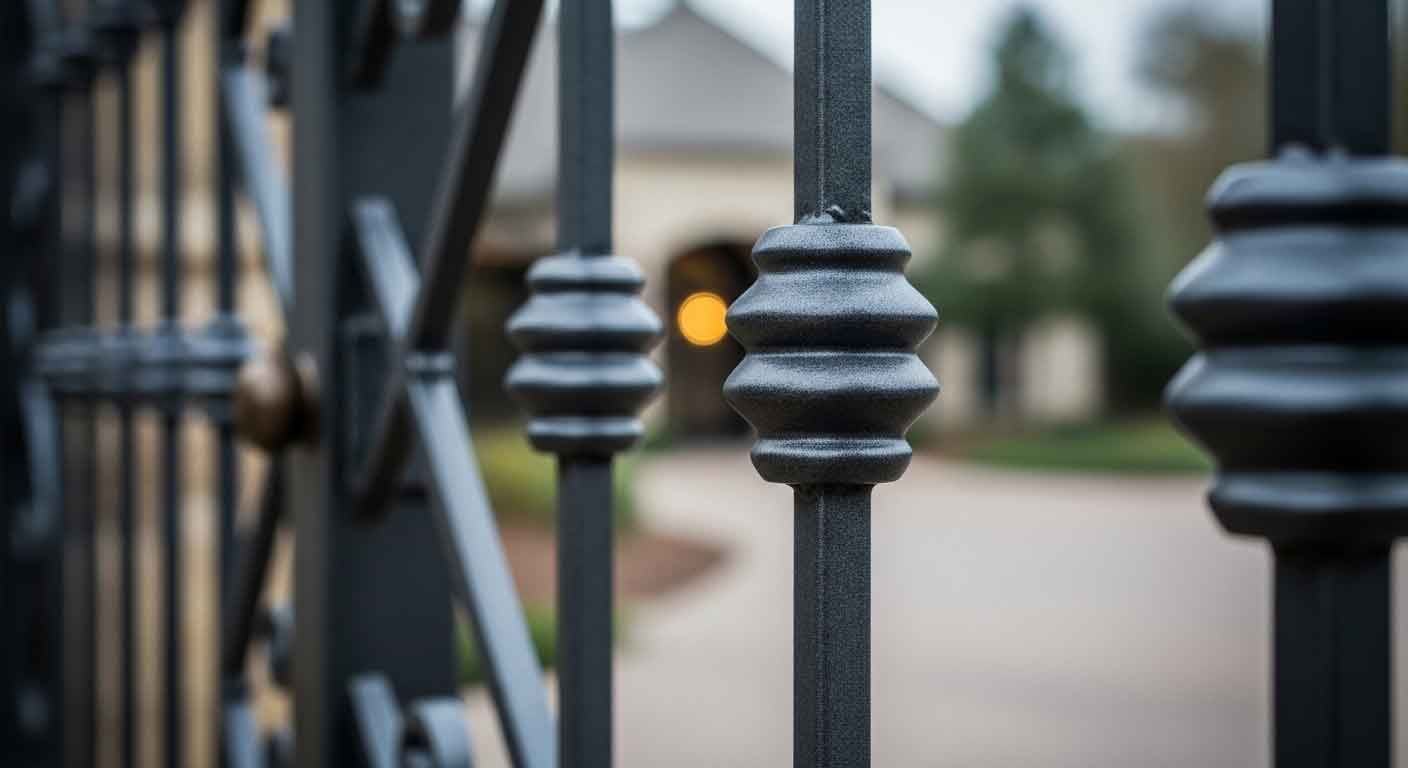
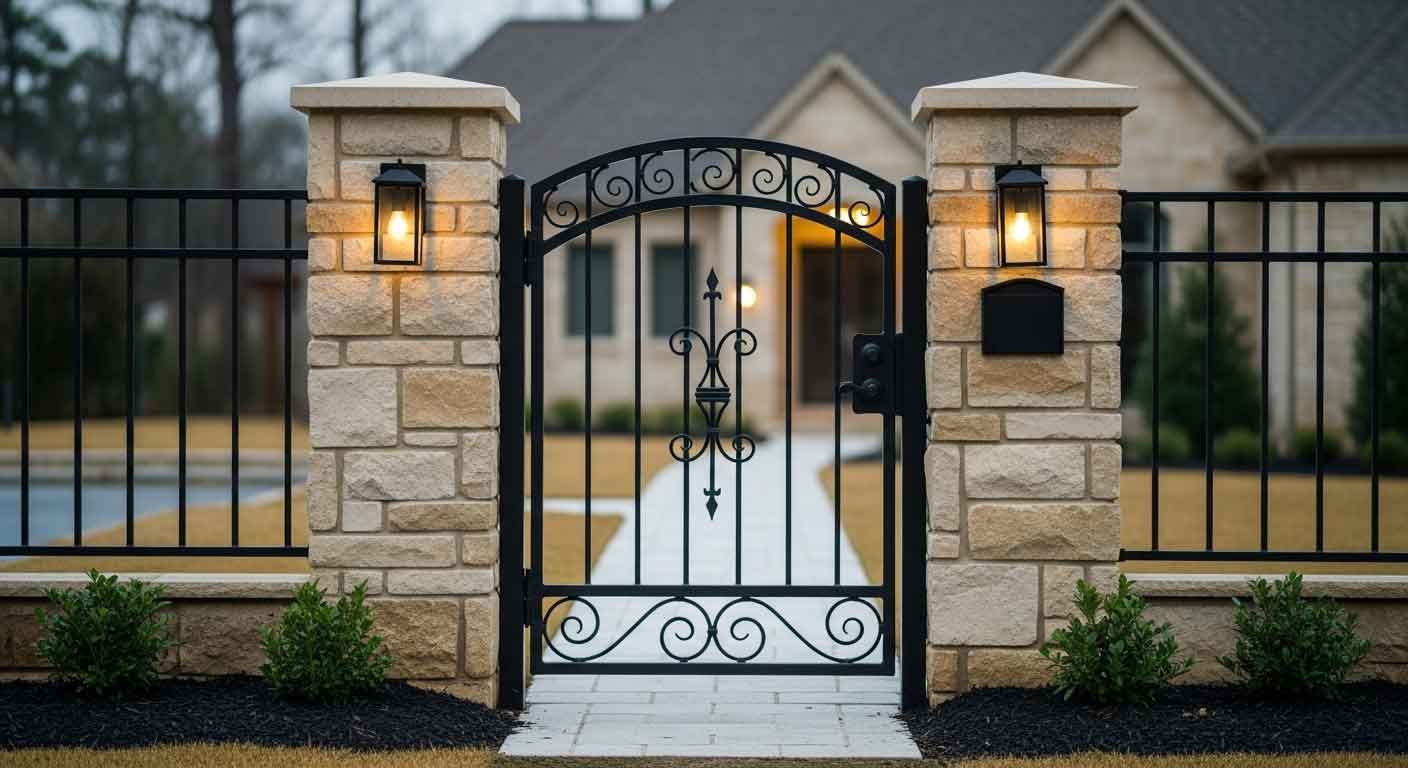
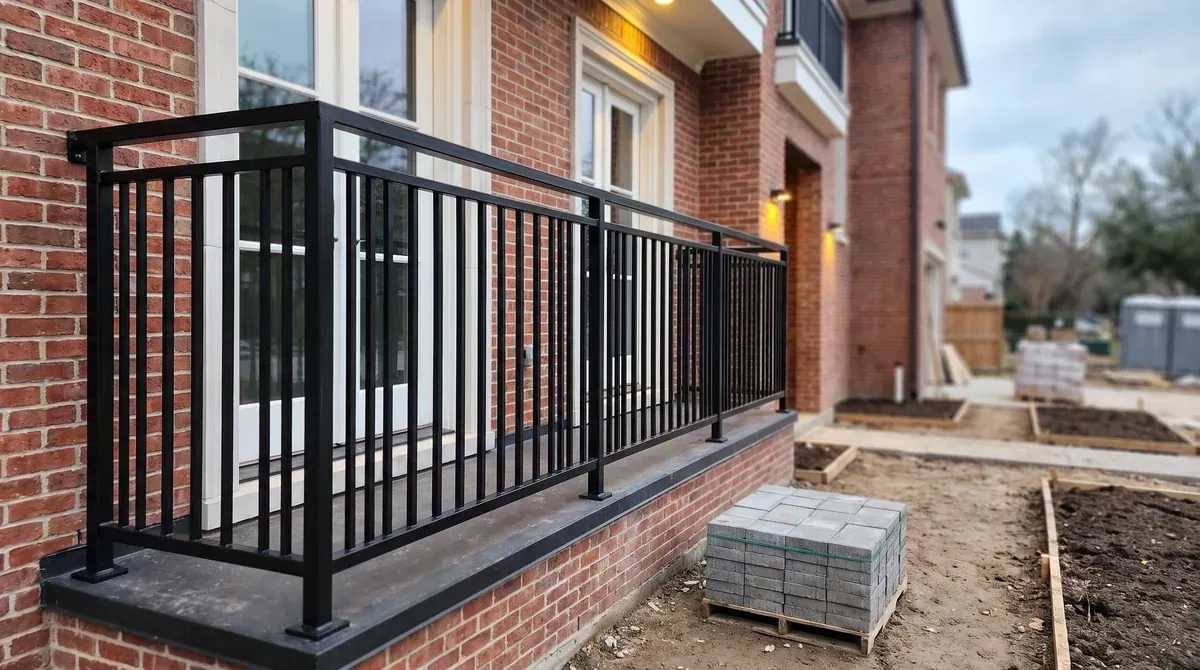
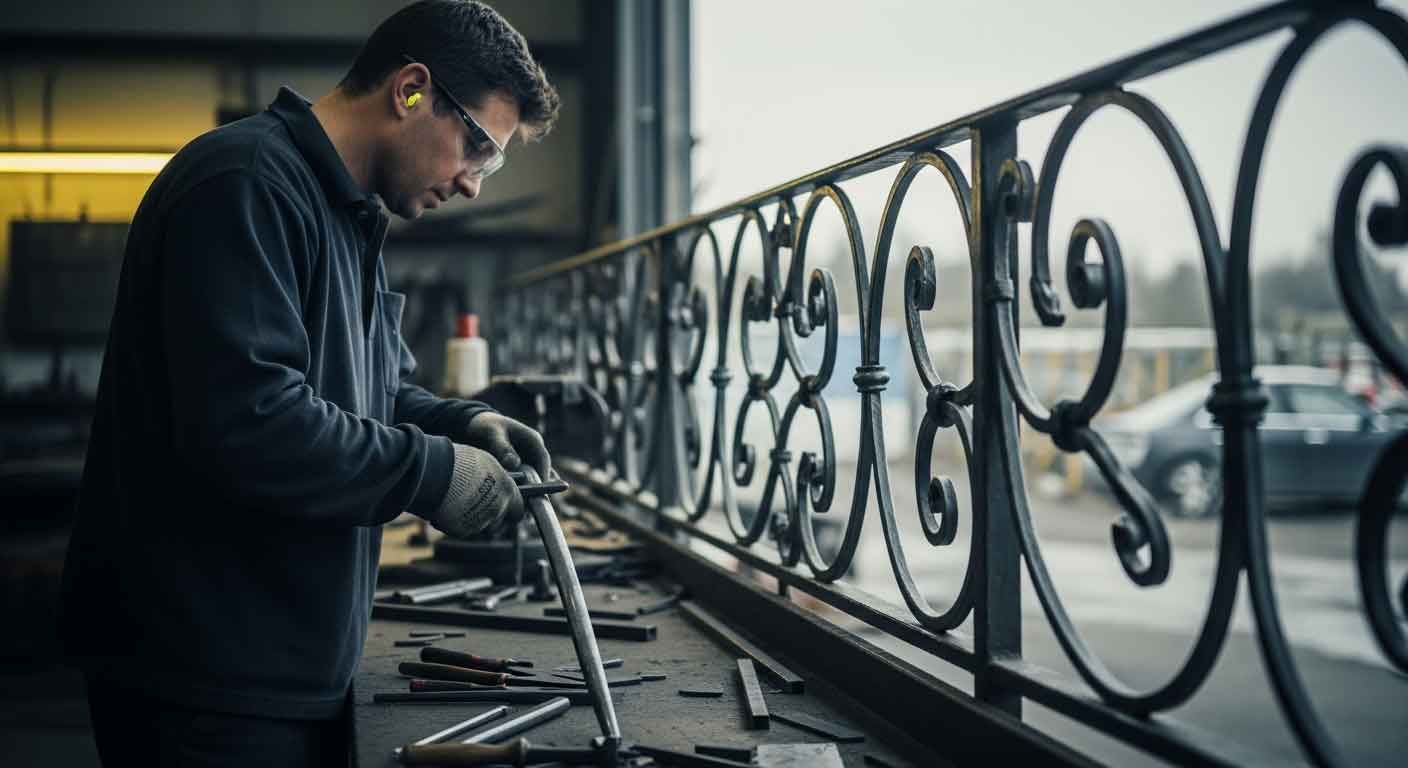
Custom iron railing is fabricated from flat bar, round bar, or square bar stock, welded and finished by hand. The design range is wide. You can go very simple, a clean vertical picket with a flat top rail, or you can add scrollwork, collar details, custom profiles, or mixed materials. The trend we see right now in West Houston and Memorial is away from ornate French and Spanish styles toward something cleaner and more architectural. That shift is happening in custom iron, not away from it.
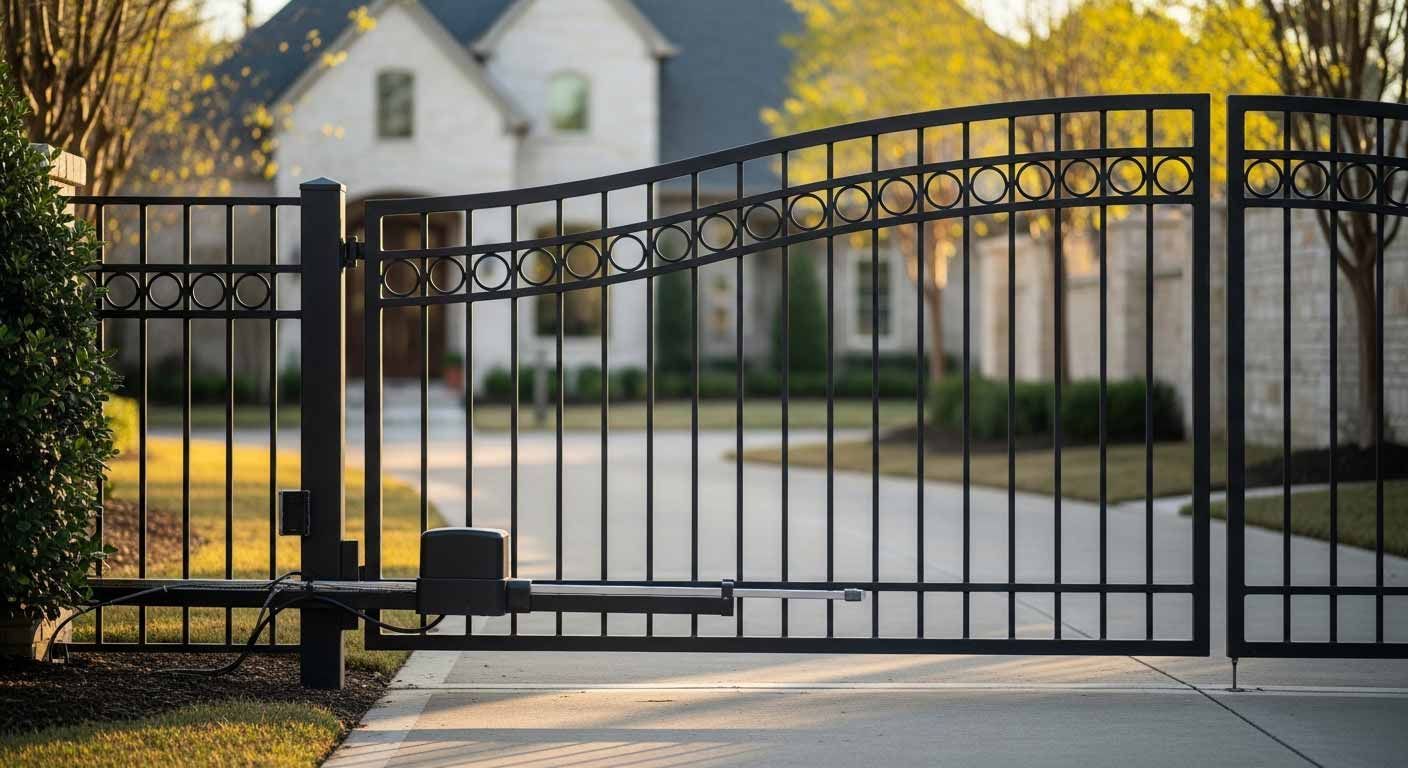
Iron also handles fabrication challenges that cable cannot. Curved staircases, tight turns, custom baluster spacing to meet code on a specific tread depth, decorative newel posts that match the existing architecture. These are problems we solve during fabrication. With cable, the post and cable geometry does most of the work, and design options narrow accordingly.
Finish choices are another factor. A powder-coated finish in matte black, oil-rubbed bronze, or a custom color is possible with iron. Cable systems have a narrower range of hardware finishes, and the cable itself stays silver. If matching an existing finish in your home matters, iron gives you more control.
How Houston's Humidity Affects Each Material
Stainless steel cable at 316-grade marine specification is highly corrosion-resistant. For exterior applications, 316-grade is the right choice. For interior staircases, 304-grade is adequate. Cable systems need periodic cleaning and occasional retensioning as the cables settle after installation, but they don't require painting or refinishing.
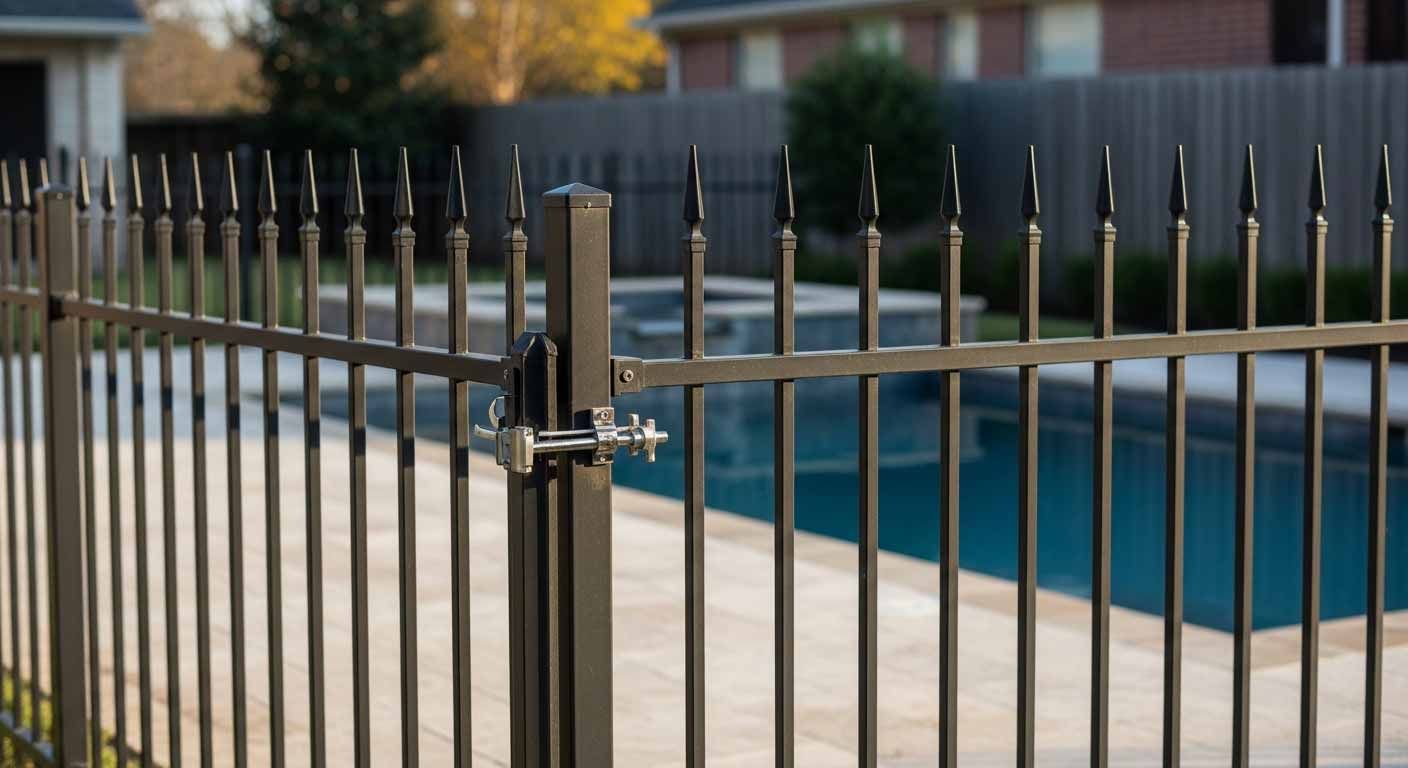
Interior iron does very well in Houston because it isn't exposed to rain or standing moisture. For exterior iron, what determines longevity is proper powder coating or paint over clean, primed metal. We seal welds and prepare surfaces specifically to prevent moisture entry. Properly finished iron that gets touched up when the coating chips can last for decades without significant problems.
HOA Approval in Memorial and West Houston
This is where the two materials have a meaningful real-world difference.
Most HOAs in West Houston and Memorial have existing approval language for traditional iron or wrought iron because it's been standard in these neighborhoods for decades. The design vocabulary is familiar to architectural review committees, and approval on a well-drawn iron railing submission tends to go smoothly.
Cable railing is newer in most HOA contexts. Some communities do approve it, particularly for interior or rear-facing applications, but if cable isn't explicitly addressed in your guidelines, the committee may need to evaluate it from scratch. That process can add time. If your project timeline is tight, checking your HOA's guidelines before committing to a material is worth doing.
We draw designs and prepare the documentation HOA committees typically need, regardless of which material you choose. That's part of our process.
How to Bring an Inspiration Image and Get a Straight Answer
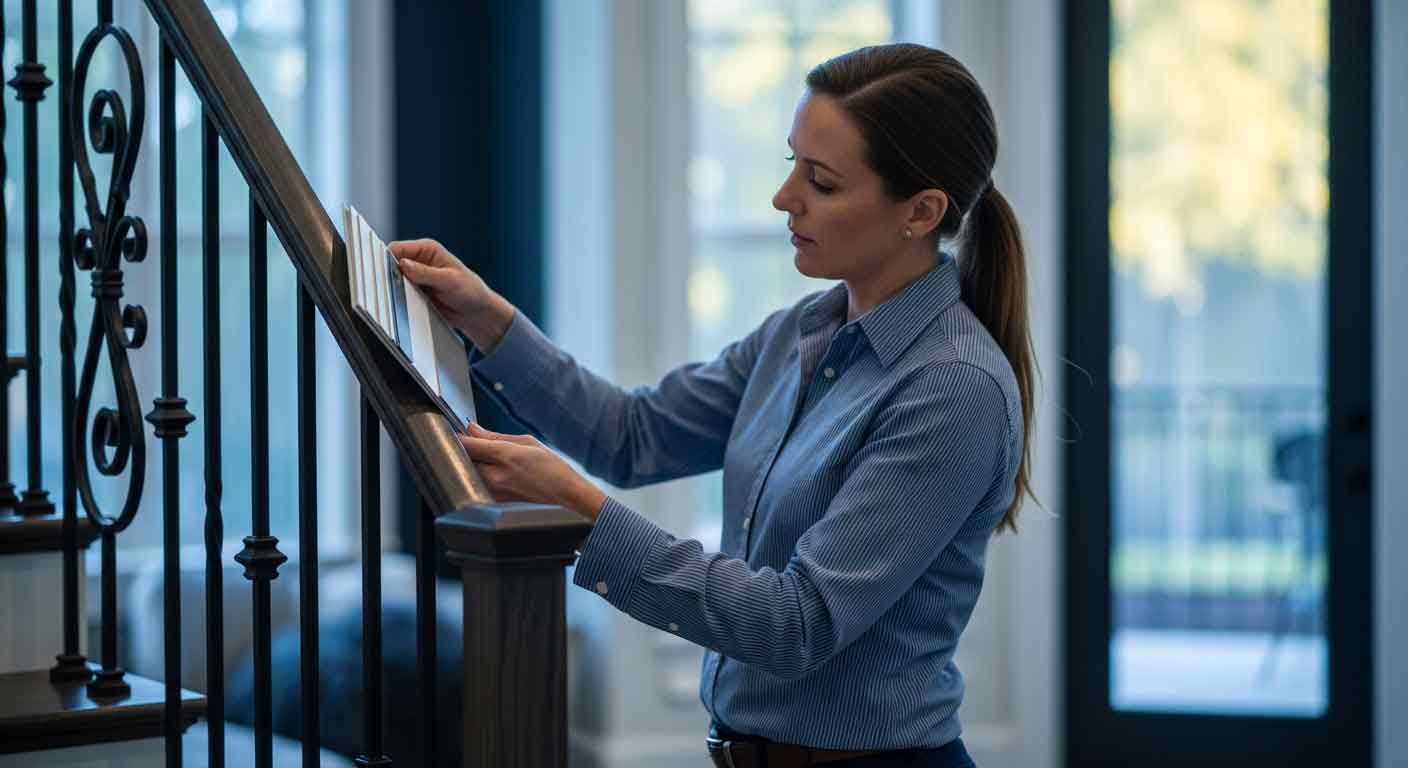
Pull your inspiration images together before you call, including the ones you're not sure about. Bring all of them. What we're looking for is the design direction underneath the specific examples, not just the image itself.
If you come in with a photo of cable railing but your home is a traditional brick house in Memorial, that's a conversation worth having before anything gets fabricated. If your designer keeps showing you cable but your instinct is iron, we can show you both so the comparison is real rather than hypothetical.
The honest read on which direction fits your home is part of what we're here for. If you're ready to talk through your project, contact us and we'll set up a time.
FAQ Section
Q: Can cable railing work in a traditional-style house? A: It can, but it's worth thinking through carefully. Cable works best when the home's architecture supports a minimal, open aesthetic. In a traditional home with wood trim, arched entries, or ornate details, cable can feel out of place even when the installation is high quality. In those cases, a simpler iron picket design often serves the space better.
Q: Is iron safe in Houston's humidity if it's installed inside? A: Interior iron does well in Houston because it isn't exposed to rain or standing moisture. The main thing to stay on top of is the finish. If the paint or powder coating chips, touch it up. Iron that's properly finished and maintained indoors can go a long time without any meaningful maintenance.
Q: Which material gets HOA approval more easily in Memorial? A: Iron typically moves through the HOA process faster in most Memorial and West Houston communities because it's already recognized in most design guidelines. Cable may require a longer evaluation if it's not explicitly addressed. We prepare drawings for both, but checking your guidelines early avoids surprises later.
From Consultation to Installation Day: What the Custom Metal Fabrication Process Actually Looks Like