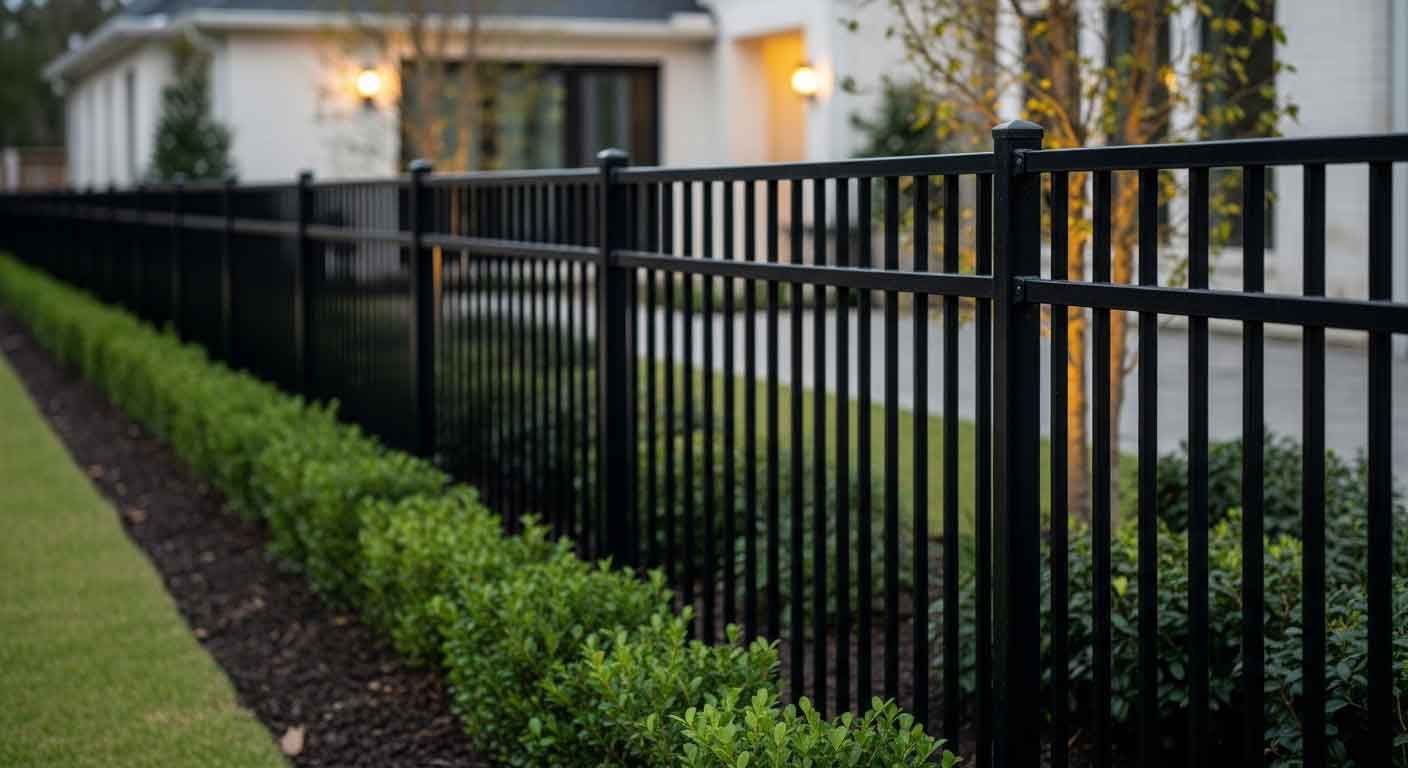
Pedestrian Entry Gates: The Iron Detail Most Houston Renovations Overlook
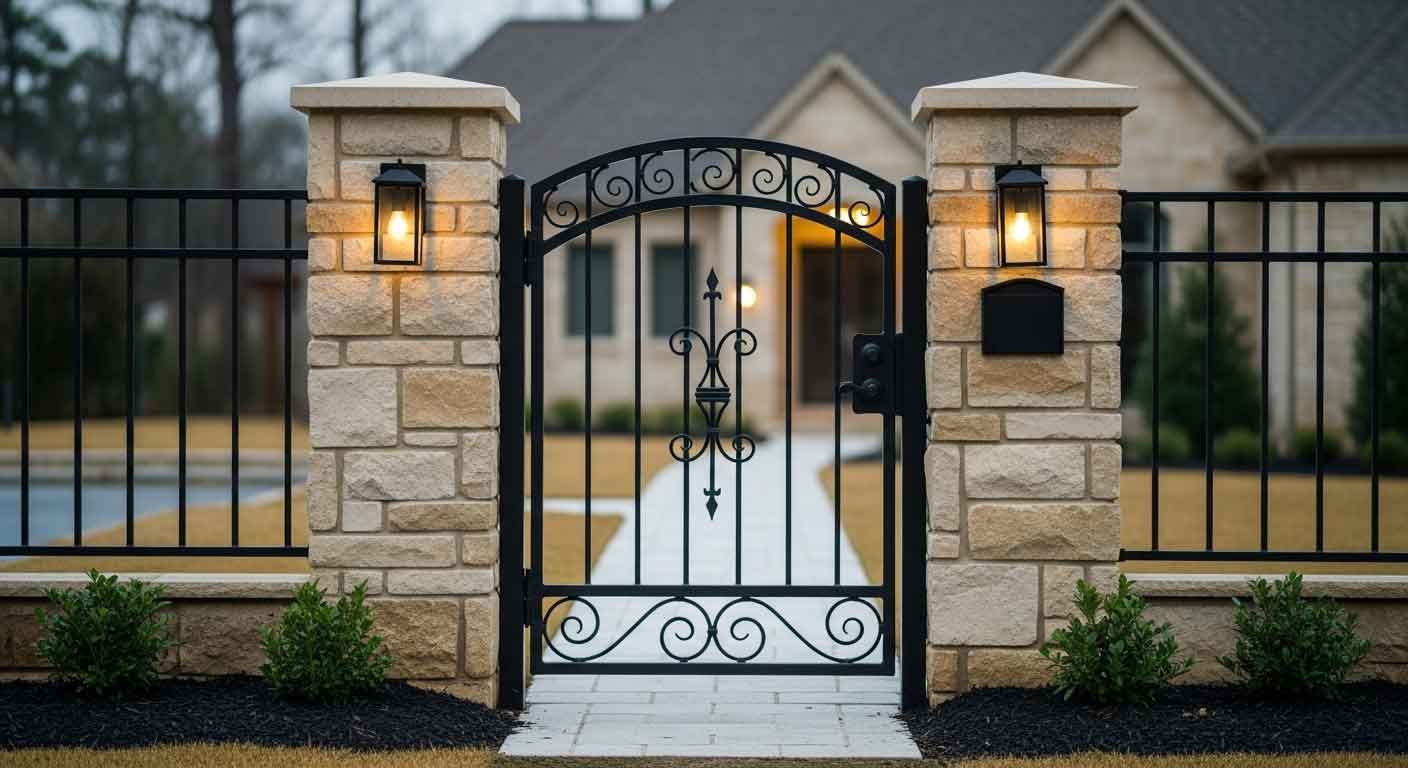
What a Pedestrian Entry Gate Is
A pedestrian entry gate is a single-panel iron gate designed for foot traffic rather than vehicles. It typically appears alongside a driveway gate, positioned between the driveway and the perimeter fencing, giving residents and guests a way to walk onto the property without opening the full driveway gate. You also see them set into a fence run along the front or side of a property, allowing access from a sidewalk or garden path.
In West Houston and Memorial neighborhoods, these gates often appear at the front corner of a lot, at a side yard entry, or at the entrance to a pool or garden area. They are a practical detail, but they also contribute significantly to how the property reads from the street.
What homeowners sometimes discover is that a pedestrian entry gate carries more design weight than its scale suggests. A property with a well-proportioned driveway gate and an unfinished side entry, or no side entry at all, can look like a project left half done.
Why Homeowners Often Plan for One Too Late
We see this pattern fairly often. A homeowner invests in a custom driveway gate and is happy with the result. A few months later, they come back for a pedestrian gate at a side entry or front corner.
Planning both at the same time has real advantages. The design can be developed as a coordinated set. The fabrication happens in one shop run. Installation can often be scheduled together. The finished property has a more intentional look.
The pedestrian gate tends to get overlooked in the initial planning conversation because homeowners are focused on the driveway gate, which is larger, more visible, and more directly tied to security. The pedestrian gate comes up at the end of a consultation, or not until the driveway gate is already installed.
When we work through the site plan with a homeowner, we ask about every access point that may eventually need a gate, not just the driveway.
Design Considerations: Matching or Complementing
There are two approaches to coordinating a pedestrian gate with a driveway gate, and neither is automatically correct.
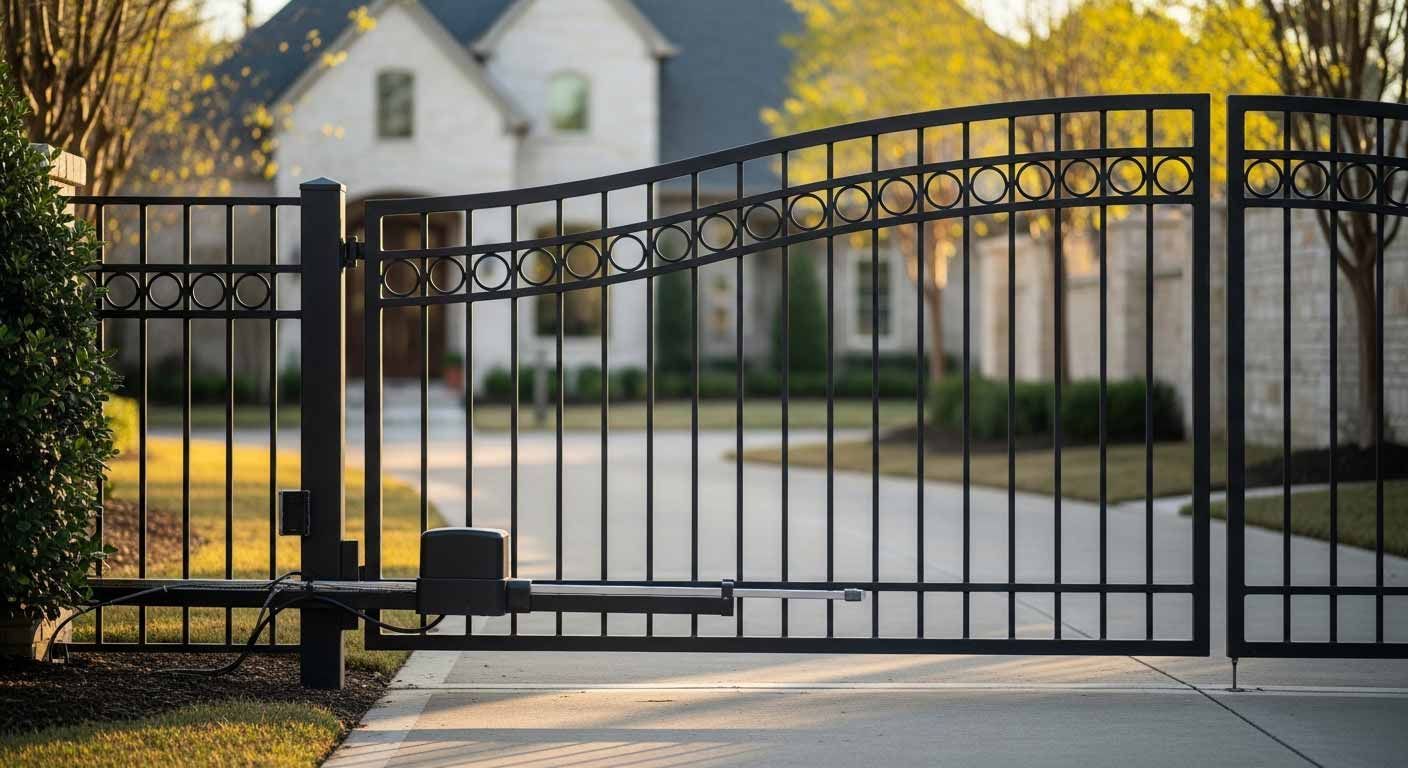
The first is to match closely, using the same picket profile, the same panel design, and the same finish. This creates a unified look that reads as a cohesive set from the street. It works well when both gates are visible from the same vantage point.
The second approach is to complement rather than replicate. The pedestrian gate shares materials and finish with the driveway gate but uses a simplified profile or different panel composition. This is often the right call when the two gates are in different locations, where identical design would feel repetitive rather than coordinated.
What does not work well is a pedestrian gate that looks unrelated to the iron fencing and driveway gate around it. That tends to happen when the gate is added later without reference to what already exists.
Hardware and Access Options
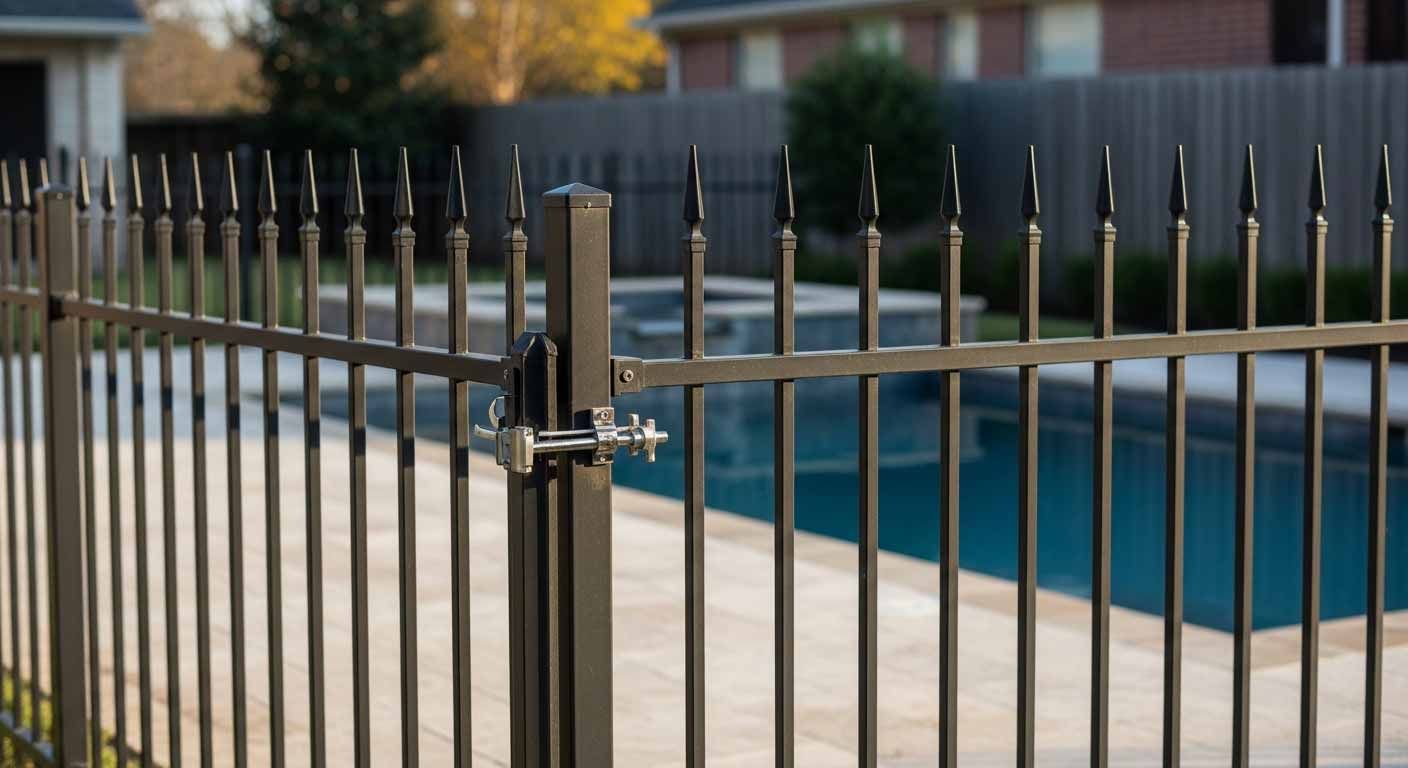
A pedestrian entry gate can be as simple or as sophisticated as the homeowner wants. A self-closing spring hinge and a keyed latch handle does the job cleanly for a side yard or garden entry. On the more involved end, the gate can be equipped with an electronic lock, a keypad, or an intercom system that integrates with the driveway gate access system.
Common hardware configurations we work with include:
- Spring hinges with self-latching closure for low-traffic entries
- Keyed deadbolt locks for secure perimeter access points
- Coded keypads for family and regular guest access without a physical key
- Intercom integration for properties where the homeowner wants to screen visitors at the pedestrian entry as well as the driveway
- Automatic operators for pedestrian gates on properties with mobility considerations or higher daily foot traffic
The right configuration depends on where the gate is located, who uses it regularly, and how it needs to coordinate with any existing access systems.
How Sizing and Swing Direction Get Decided
Pedestrian gates are typically 36 to 48 inches wide. A 36-inch gate is the most common choice for a side yard or garden path entry. Wider openings make sense for pool areas or service access points where equipment may need to pass through.
Swing direction is determined by the site conditions. In most residential installations, the gate should swing inward toward the property, away from the street or public sidewalk. Where the opening is set into a corner or close to a wall, available clearance on the inward side determines whether a standard swing works or whether hinge placement needs to be adjusted. We work through this in the design consultation before fabrication begins.
HOA Considerations for Pedestrian Gates
In HOA-governed neighborhoods across West Houston and Memorial, pedestrian gates go through the same architectural review process as driveway gates and perimeter fencing. Homeowners adding a pedestrian gate as a separate project often need to submit new drawings to the review committee, even if the driveway gate was already approved.
What we typically prepare for HOA submission includes a drawing of the gate design, material and finish specifications, installation location on the property, and dimensions. If you are adding a pedestrian gate to a property that already has an approved driveway gate, we can reference the prior design to simplify the submission.
Planning Your Entry Gate Project
A pedestrian entry gate is a small element that makes a real difference in how a property functions and how it looks. Whether you are planning it alongside a driveway gate or adding it to a property that already has perimeter fencing, getting the design and hardware right from the start avoids a second project down the road.
A.G. Metalworks handles custom iron entry gates for homeowners in West Houston, Memorial, and surrounding Houston-area neighborhoods. We work through design, sizing, hardware selection, and HOA documentation as part of the consultation process, and we have been doing this work for nearly 40 years.
Contact A.G. Metalworks to discuss your pedestrian entry gate project by
requesting a free consultation or calling us at (346) 528-5677.


From Consultation to Installation Day: What the Custom Metal Fabrication Process Actually Looks Like